Saturday, 28 November 2015

Changed my mind again...

Just as soon as I write to say I'm into historical fiction, I felt myself slipping out of it. After Margaret George's novel I couldn't bring myself to continue with Philippa Gregory's Cousin's War series, the next on my list. I waited a couple days for the urge to hit me; nope. I moved onto another genre instead.

I'm once more back into YA novels. OMG. I never thought I'd be able to read them again, 'cause I went through a long period where I couldn't tolerate the cliches found in pretty much every YA book; you know, the love triangle, the ridiculously perfect (or ridiculously flawed) hot guy, the Mary-Sue girl, etc. But I picked up An Ember in the Ashes by Sabaa Tahir; I read it in three days, after being highly skeptical for the first 50-odd pages. I honestly really really really enjoyed it, and I'm super bummed that the sequel isn't out yet, because I really want to know what happens to everyone. Elias was my favourite character to read about, which was strange because I usually prefer the female character in multi-persona books. But he was so fun to read about, and Laia was really good to read for character development. Elias, though - his chapters were what made me stick around, and I would be flipping pages through Laia's chapters sometimes to see what happened next. Laia got really interesting towards the end though, so hopefully she'll be more of a proactive character for the rest of the series. I really loved the world in this book; at first, all the made-up places and culture baffled me and my brain went into information overload mode, but I got the hang of it. I'm so used to reading stuff about countries and cultures I already know (*hides in shame*). I'm sorta glad it didn't appear to be set in our future; I've read so many good novels, but not great novels, that have sorta tried to emulate the Hunger Games and it just got a bit boring after a while. The historical aspect, the Roman cultural references, were really cool, and a nice way to wean myself off the heavy historical stuff. I'm pretty much done with heavy reading for now, I think. That last book gave me a bit of a headache. But yeah, this book was a really good introduction to this world and the characters, and the ending answered just enough questions to make me somewhat satisfied that I can wait until the next one, without spoiling it all (which shits me because I really wanted to know who Cook was and who the Lioness was betrayed by!!!). Totally recommended.

One of my all time favourite YA series is the Throne of Glass series - for anyone who loves this series, it might shock you to know I haven't read Queen of Shadows yet. The book came out in September, and around that time I was gung-ho classic girl - I had no inclination to read YA novels. I really regret not getting it as soon as it came out, because now I'm stuck waiting for my order from Book Depository to arrive. I'm really antsy to know what happens, and the rating on Goodreads just blows my mind; 4.7 stars! The book is, by all accounts, so good and I don't have it! Damn. 

But what I love about this series is that it only gets better, not worse. I've had a couple bad experiences with series that started good but turned to shit (we all know which one I'm talking about). The first book was pretty good - nothing incredibly special, but still interesting enough to get me to read the next one. And boy, am I glad I did. Celaena is the most bad-ass heroine ever, and I totally love her character! She sorta pissed me off in the first one with her sparkly-dress fetish, but you get over that once you've embraced the pure awesomeness that is Celaena. But the second book - that was the clincher for me. That was what got me really into it. That ending fucked me up big time, like nothing else. I was in a total book-coma after finishing that, and I immediately moved onto the next one (I waited a while before reading the second one because I knew from the reviews that the ending was fucked - lucky). The third one was the best by far. I really enjoyed all the new characters, like Rowan and Manon (yes Manon!!) and I really loved there was no romance in it. It was nice to have a break from that, and it was definitely nice to see Celaena decide there were more important things than mooning over her lover. I'm super excited to see what is in store for the next book. but first I have to wait. Urghhh. I hate waiting. And I love that cover - I want it on my shelf so bad!!! It's so beautiful. 

I haven't really got anything else to say - I've really only just got back into the swing of YA. My next update should have more. After all, I still have the Falling Kingdoms series by Morgan Rhodes and the Remnant Chronicles by Mary E. Pearson to get through. Or maybe I'll decide I like non-fiction. I don't know.

Thanks for reading!

Thursday, 26 November 2015

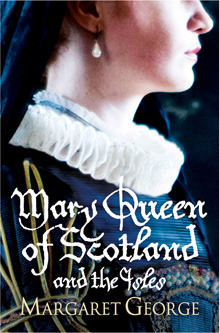
Mary Queen of Scotland and the Isles by Margaret George


18000059

Rating: ★★★★★

This is the story of Mary Queen of Scotland, the ill-fated ruler of the wild and savage land north of England, the reigning power on the island. It's a frightfully long book, and it covers all of her life, from her birth and the circumstances surrounding it to her death in 1587.

Mary is born in a time when Scottish independence is not secured, in a land fighting for freedom from English invasion. Henry VIII tries to claim her country for his own; she is crowned Queen at only six days old, after her father dies defending the country. She spends her childhood moved around Scotland in order to hide from English troops attempting to capture her and bring her back to England to marry Edward Tudor, the King's son. Eventually she is sent to France, to marry the young French prince Francois.

The novel itself takes readers from her time as beloved princess of the French court, to her short reign as Queen of France, and her return to Scotland. It portrays the political and sexual environment she was forced into, and rehashes over the controversies with her second and third husbands, the Lords Darnley and Bothwell respectively. We are taken on Mary's journey from revered to reviled, to her imprisonment and forced abdication to her baby son James, the future King of England, and her escape and fleeing to England, where she is held by her cousin Elizabeth I for nearly twenty years before finally being executed.

This novel was shockingly brilliant, and haunting. The scope of it takes readers on an emotional journey, and we watch closely as Mary grows to realise that she cannot see the world around her through a child's eyes. We watch as she makes good decisions, criticise her when she makes bad ones (and she makes so many bad ones!!!), and cry when, at the end, we are forced to look on as she comes to terms with her impending death.

Mary's characterisation was a big win for me. Plaidy tended to make her seem too stupid and simplistic; while Mary was certainly naive, there was no reason to  believe she was dumb. She was an incompetent ruler, but a good woman. George highlighted the complexity of her character. When it was over, I mourned. Mourned. As in, full-on crying for fifteen minutes mourn.

This is an epic read for anyone who loves historical fiction and is game enough to work through a lengthy novel of nearly nine hundred pages.

Saturday, 21 November 2015

Royal Road to Fotheringhay by Jean Plaidy

The Royal Road to Fotheringhay (Stuart Saga, #1) (Mary Stuart, #1)

Rating: ★★★★☆


"Ever since I was a child I had this morbid fascination with this time period. In particular, Mary Stuart, Queen of Scots. She was my introduction to the world of Renaissance intrigue, passion and politics. I couldn't exactly say that I related to her - but her story affected me profoundly, to the point that today she is still my favourite history lesson.

Jean Plaidy has become a recent love of mine. I've read few of her books; I started with
The Lady in the Tower with Anne Boleyn as the main character. After reading Philippa Gregory's attempt at capturing the Boleyn charm, I definitely found it lacking in comparison to Plaidy's - her interpretation of Anne was weak and somewhat two-dimensional, even outdated. But Plaidy's take on her, portraying her more sympathetically, was far more believable, and it quite honestly made me cry. So I knew I had to look it up and see if she had written anything on Mary Stuart.

The novel itself covers the major events in her early life; from her journey to France and indulging in the rich lifestyle of the sophisticated French courts, marrying the sickly Dauphin and becoming Queen, only to have him die - to returning to Scotland, marrying the awful Darnley, having her son, the intrigue with Bothwell and the Darnley murder plot, to finally being captured and imprisoned by the Scottish nobility.

I was impressed by the novel, and I am deeply surprised that there are so many negative reviews of this book; it is an excellent retelling of the early life of the Queen of Scots, and is quite clearly based on the author's interpretation of the facts, shown through the research done on the subject matter. I am inclined to think Mary was a good woman, if a weak and ineffectual leader, dominated by men who would later cause her downfall. I appreciated the fact that Plaidy didn't attempt to vilify either the Protestants or the Catholics too much (in my eyes, anyway).

I hands-down loved this novel, and I'm looking forward to reading the next one. I know I'll have to read Margaret George's version, but, even if it's just for a while, this book will remain close to my heart as a fond remembrance of my early childhood discoveries."

This was my review on Goodreads; after some reflection, and a means of comparison, I have to say that this is an easy introduction to the life of Mary Queen of Scots. If you're looking for a simple way to edge into her world, I'd start with this one. The language is uncomplicated, and the story flows fairly well. I admittedly now have a slight issue with the way she is presented in the novel. She comes off as weak and somewhat stupid, always ready to relinquish control to the men in her life. There's some inconsistencies with her character too, with her displaying strength one minute and doing a complete one-eighty the next. But other than that it is really quite a good novel.  I'd recommend this over Margaret George's rendition, as it is much less daunting and far easier to get through.

Thursday, 19 November 2015

General update.

Hi! I know it's been a hell of a while since I last posted anything here... I've been pretty busy lately. I had my end-of-year exams to complete my school year; it was pretty brutal, but I got through it and I'm now an unemployed bum, ha ha. I haven't got the results back, won't till December, so I've basically got to wait around till then.

Lately I've been taking care of my mum. She had a hip replacement due to ongoing degeneration of the joint site, basically leaving no joint left. As a result of her surgery, a complication has come up, known as drop foot. Basically, this is when the nerves are damaged or in shock in the foot, and they don't transmit messages to and/or from the brain, meaning the patient is unable to lift their foot up. The doctors believe it happened because she elected to have an epidural to undergo surgery; the needle may have accidentally made contact with the nerves running into the left side of the leg. They reckon the nerves are shocked because they did an MRI and nothing turned up; pretty much, mum has to wait until the numbness in her foot goes away and she can stand properly, without a brace or a walking frame. Her new hip is doing just fine though.

To be honest, I'm a little pissed off. Now that I'm at home and out of school - and I don't have the means of finding a job - I'm basically her full-time carer. She doesn't deal well with losing her independence, so she's spent the last week basically taking out her situation on me. And I have to do basically all the chores around the house; if it were just me and mum it would be fine, but I've seen my dad and my brother sitting on the couch watching me do jobs while they do nothing. Its like, now I'm home I suddenly have to do everything - take care of mum and do all the work. It kinda pisses me off. Even on the weekends I have to do all the work. Like, would it really kill dad to help mum then so I can have a break? Right now, she's driving me crazy. He's shown no interest in her since she got home, and to top it off my brother has continued to be a little shit around her, despite clearly being told to shut the fuck up around her.

I had a bit of a depression relapse the other week. That explains my last post. Me and dad had a fight; I was in the right, but I went right back to how I used to be - weak and useless - and backed down. It put me in a head space I really didn't want to go back into, and in a fit of manic sadness I took my razor and I cut all down my hip, from my waist to the top of my thighs. There was a lot of blood, and it kinda freaked me out. But I've talked it out with my psych, and I'm moving on from it. I still haven't told mum and dad the extent of my issues, because I feel like they just don't care. What's the point in wasting breath on something when I won't get jack shit in return?

Anyway, that's the heavy stuff down. As to the happier stuff - I've sorta moved on from classic novels for now. I lost interest while trying to read Sense and Sensibility again (why did I try???), and I was also watching my show which served to distract me even further from the classics. I've been watching The Tudors lately; not accurate, I know, sensationalist, I know, but exciting, I know. I just really love this series; I cried when Natalie Dormer's Anne Boleyn died. I've started watching season 3, but I'm finding it hard to move on after Anne, she was what made the show really. I'm really trying to like Jane Seymour, but she' so... boring. Too nice. I also binge-watched Showtime's series The Borgias - I was so angry when I found out they never finished the series! I mean, come on! Another ten episodes. Been sorta watching Reign, but I'm finding it hard to get past the blatant lack of respect for the historical narrative. That and the actress who plays Mary - I love her, I think she's brilliant, but Mary is supposed to be pale and have dark red hair. I can't get past it - finicky, but Mary Queen of Scots was the first ever historical figure that fascinated me.

Anyway, I got off track. I'm now reading historical fiction. Yep, history is taking over my life at the moment. I've always sort of been a Tudor history buff, but I'm really trying to expand my learning now. So far, I've read some novels on the Wars of the Roses, and I read Margaret George's Mary Queen of Scotland and the Isles and Jean Plaidy's Royal Road to Fotheringhay. I really enjoyed Plaidy's interpretation of Mary Queen of Scots, but I definitely now prefer Margaret George. I cried for fifteen minutes after finishing her novel, and it was massive - I really went on a journey there, and I felt this profound loss once it was over.

I'm going to be posting some reviews soon on the books I've read so far. Whether they'll be on here, on my Goodreads, or both, I don't know. Maybe I'll do a mix. Does anyone have any recommendations for historical television shows or movies you really enjoyed? How about historical fiction? I'd be really interested to get into them.

Thanks for reading!

Sunday, 25 October 2015

Tess of the D'Urbervilles by Thomas Hardy


Rating: ★★★★★

Tess of the D'Urbervilles was a book I had wanted to read for a long time. I could never find the book in my local Dymocks store, so for a while I read it on a tiny screen on my iPhone, which is not at all useful for reading books, though it is pretty convenient. I finally got around to ordering it online, which was great, and the book arrived in perfect condition, which, for the edition I got, is pretty bloody difficult to achieve!

What first struck me about this book was Tess Durbeyfield's accent - it isn't how I was used to reading it in classic novels. The women are usually classy, proper and elegant - to have a girl with a country farm-town accent was a refreshing experience for me. What was also rather jarring was her home life; it is quite obvious from the get-go that she is rather unimpressed with the elder members of her family group, and seems to assume a role of responsibility over them. I felt sorry for poor Tess, being not at all like the vaguely driven family she grew up in. I was so shocked when the horse just died. It was really quite gruesome to read, too. Poor horsey.

I had mixed feelings about her parents throughout the novel. It felt like their motives honestly weren't for the benefit of their daughter, but rather to gain money and fortune; super fishy, the bar scene too. Tess is very reluctant to go through with carrying out the ambitions of her family, and I really appreciated that she was a character with such staunch morals - indeed, it was her guilt over the death of the horse that led to her leaving to visit the Stoke-D'Urberville family.

The first time Tess meets Alec its obvious she doesn't like him all that much - he is way too forward, and the impression that lasted was that he intended to take advantage of her. And plus, even his family background alerts you to the fact that he's probably a dishonest person. I mean, who lies about their heritage to get ahead? Who cheats someone else out of the esteem of claiming nobility in order to make money? You see the rape scene a mile off, and what sucks about it is that you know its coming, and you can't do anything about it. It's like a triple whammy, first with Alec raping her, then getting her pregnant, after which she has the child and is exposed to public shame as a loose woman. Then, after all that, the baby dies. It seems as though basically everything bad that could happen to a woman in the era happens to Tess in the novel.

I suppose I'm like many others when I say I don't really know which of the two men of Tess's life to hate more. Alec is just despicable; a wealthy man used to getting his way all the time, with no father in the picture and an invalid mother. He's a womanizer, a pervert and a rapist. He seems to think he should just get what he wants from women because he is a man. But, on the other hand, that is all you expect from him; you don't have any high hopes for him as a character because you know all he'll ever amount to is a lowlife.

I really, really wanted to like Angel Clare. He's quite obviously constructed with the aspects of a heroic male figure in mind, the one that should give Tess the happily ever after she so deserves. They meet at a dairy farm, where they both work. After a lengthy and passionate pursuit, Tess agrees to marry him. They do so at the closing of the year, on New Year's Eve; after this Angel confesses that he had been dishonest with her. It is clear throughout scenes with Angel that he is a proper man, with staunch, inflexible morals and principles. So when Tess, in a reciprocal sort of mood following his confession, tells him of her past, the fact that he decides to leave her is utterly shocking for me. I mean, I had such high hopes for him as a character! I almost think he's worse than Alec because you expect so much more from him. In the end he turns out to be a hypocrite, and a coward; the perfect male hero is revealed to be deeply flawed.

The ending was just so sad. I really hated the fact that, even after everything, Tess was still the one who paid. 

I really loved this book. Deep, affecting, and often quite depressing, it had a lot to offer regarding the sexual and moral value of women in society. I appreciate that it was written by a male author, showing that feminism doesn't just have to be carried by the female gender.

I highly recommend this book to anyone who loves female criticism in classic literature.

Saturday, 17 October 2015

Writing essays...

There's absolutely no way I'll claim I know the perfect formula for writing essays. No. But my efforts are passable, certainly, and I do very well in testing situations. I know some of you doing English or Literature as a subject are facing the prospect of upcoming end of year exams. I really don't know if any of this will help, it's just a thought I had - my something good for the day, you know? So I thought I'd write out a couple tips I found useful, or that I've been told over the years.

1. Answer the question.

This sounds incredibly patronising, but we've been exposed to a few feedback sheets in Lit class and the markers make it very evident that people lose marks for failing to read the essay question properly. This means that part of the question is not answered in the response, or you just lose your head completely and don't answer the question at all. The key to solving this is having the question in front of you; think of the text you intend to use to respond to the question; highlight key words and ideas in the question, i.e. the concepts such as ideas, and the terms such as assess or evaluate or comment; create a mindmap of sorts whereby you annotate those highlighted parts with brief summaries of each, thereby ensuring you've summarised the intent of your essay. This should only be quick and rushed, nothing fancy at all.


For example, a practice question taken from a past WACE exam. This process has been carried out using the text Frankenstein by Mary Shelley.

2. Make a plan.

Because you're probably given an hour at most on each individual essay in an exam, this does not need to be fancy either. Just sort the above into usable paragraph planning, just as a little nudge when you get stuck on what to write (ideally, this should just help you get unstuck). There is no need for detail, or to write down quotations - just a short sentence summary to remind you of what your aim is to convey in that paragraph. All in all, both steps should only take about 5 minutes. Instead of writing heaps of essays, just practice this; it really helps you think, and begin to sort out your quotes and ideas mentally in your head, thus becoming faster.

3. Don't write essays when practicing writing essays.

This sounds stupid, but I promise it isn't. You spend a lot of time writing an essay; you devote a lot of time to finding good quotes to prepare for answering the question, and the essay you write, because you have the time, is near perfect in your eyes. You memorise it, and go in the exam and write it. You feel good about it; then you get your paper back, only to find big fat crosses or question marks everywhere. Because in practicing so hard, in spending so much tie preparing for any number of responses you DIDN'T PREPARE FOR THE QUESTION. Instead of writing essays, write plans on individual questions including quotes. Make a really general plan with three or four quotes per point, encapsulating all the reading strategies possible for the text studied; this way you learn a bunch of quotes under headings that are workable for exam time (since basically all questions discuss reading practices in some way, shape or form).

4. Research outside the text.

You get so caught up in preparing for the text itself, that when you come to the most suitable exam question and you find that it contains information on context, or devices, or conventions that you don't understand. Bummer. So, when preparing for your text, compile some information about the time period in which it was written or published. What were the values of the time period? What social movements occurred? Political, economic unrest? Power balance? This helps you provide a more nuanced, thoughtful essay when it comes to dealing with context and prevents you from making generalised statements about the context of the text's production, thus setting you apart from the rest. Having a good understanding of literary terminology will stop you from tripping up in an exam when asked for something like the correlation between structure and the presentation of ideas and values.

5. Look to your betters.

Sometimes, all the preparation in the world isn't enough to boost your mark up. You wonder why you try so hard and still fall down, when your classmate barely puts in the effort and soars. Why? It comes down to expression, essentially. It isn't enough to have good ideas anymore - you have to be able to know how to express them. If you're having trouble with that, ask someone to help you. Ask a proficient classmate if they have any saved practice essays lying around that you might be able to read over, to get a feel for the language. Ask a teacher to read over some of your practice essays with you, to correct some mistakes, and maybe even ask them to rewrite a paragraph to show you where you aren't meeting the standard. Ask a good mate that does well in English to read an essay, or part of an essay, and offer critiques; or, take your ideas and rewrite them, so that you might compare them and see the areas you need to improve. This is not cheating; it is the absorption of alternate ways of expressing ideas, because that is usually where the majority of people fall down.

6. Swallow a dictionary.

No, jokes. But become familiar with alternate ways of expressing things. Come to think about it, this isn't all that different from the previous advice. What I mean is, instead of stating 'she believes that old ideas are bad', you could instead state 'the character in question believes outdated ideologies negatively impact society'. Use a thesaurus to find 'smarter' words if you have to. But please, don't do a Joey from Friends and replace every word with a synonym because it just won't make sense. If it sounds too simplistic, find a better word. Expand your vocabulary. Read more books - classics are really great for expanding your word bank (hint hint). Just read in general; there is a definitive correlation between good marks and those who read more, across all subjects requiring language and communication.

7. Read the text more than once.

Pretty self explanatory. If you read the text multiple times, you gain an understanding of things you may not have picked up before, and its also great to refresh your memory.

8. Finally, don't panic in the exam room.

If you know all the stuff, you've learned the quotes, you know your text inside out, what are you panicking for? It only screws with your head, messes your concentration and leads to bad marks. Don't listen to how worried other people are. It is okay to be confident. Nail it.

That's all from me. Happy studying. Thanks for reading!