My rating: 5 of 5 stars
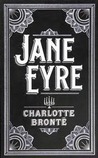
There really aren't any words I can use to fully describe my love for this novel. Nothing I have read since I first took the plunge measures up - in the few months that have passed since I last read it I cannot put it out of my mind. I once said it was one of my absolute favourite novels - I honestly believe I was under-selling it, because I can now state after a time of reflection that no book has, or likely will, measure up in my eyes.
I'm not generally one of those people who rereads books over and over. Even if I love a book I'll probably still never touch it again (shockingly, I've even found difficulty rereading Harry Potter, probably my favourite series - I maybe got halfway through the series the second time before I gave up). All the books in the world, not enough time to get through them, sort of thing. Throughout most of my adolescence I've been on a mission to make my way through as many of these as possible - all types of fictional genres; something about being well-versed. That is, until I got to Jane Eyre in my last year of high school.
Jane Eyre is a small, pale, plain girl with neither talent nor wealth to make up for these flaws. Even this self-prescribed label draws me to her - simply because there are times I have felt (and I'm sure women and girls the world over have felt) that I too fit this description. What she proves to us all though, is that one doesn't need beauty or wealth to make something of ourselves. We don't need to discard our principles to adhere to others. Throughout the novel, she noticeably changes before our eyes; the small, abused and bitter girl becomes a young woman at peace with and with faith in her own morals, as she wrenches back control of her own life from her oppressors. For indeed that is what I find at the core of her - she goes through this journey, these experiences that subjugate her, and comes out freed of all who had shackled her spirit. She at once demonstrates strength and vulnerability, bravery and weakness, and this not only makes her a flawed being, but a real one.
I place all the focus on Jane because that is what the story is all about. Mr Rochester is brilliant, temperamental, flawed and at times a little annoying (I screamed at the book when I found out about Bertha), and I absolutely loved the romance between the two - but I'd prefer not to wax poetic about him. He's the tool that allows Jane to achieve her dreams of liberty from the constraints of Victorian society, not only as a working class member but as a female. She removes herself from him, proving that she is the one with the power after all, and at last returns to him when all illusions of power play between male and female are dropped; he has lost his status as master, and she in turn is a wealthy heiress who proves to herself that freedom isn't necessarily solitude or independence. They come together as equals, and thus childhood Jane achieves her unseemly desires.
I am currently rereading this novel, and for once I am not flipping hurriedly to turn the pages and move onto the next book. No, I am content with rereading this novel to my heart's content, as I know that this certainly won't be the last time I reread Jane Eyre.
First read: 30 August - 3 September 2015
Second read: 19 - 23 January 2016