Saturday, 30 January 2016

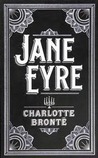
Jane Eyre by Charlotte Bronte

My rating: 5 of 5 stars

There really aren't any words I can use to fully describe my love for this novel. Nothing I have read since I first took the plunge measures up - in the few months that have passed since I last read it I cannot put it out of my mind. I once said it was one of my absolute favourite novels - I honestly believe I was under-selling it, because I can now state after a time of reflection that no book has, or likely will, measure up in my eyes.

I'm not generally one of those people who rereads books over and over. Even if I love a book I'll probably still never touch it again (shockingly, I've even found difficulty rereading Harry Potter, probably my favourite series - I maybe got halfway through the series the second time before I gave up). All the books in the world, not enough time to get through them, sort of thing. Throughout most of my adolescence I've been on a mission to make my way through as many of these as possible - all types of fictional genres; something about being well-versed. That is, until I got to Jane Eyre in my last year of high school.

Jane Eyre is a small, pale, plain girl with neither talent nor wealth to make up for these flaws. Even this self-prescribed label draws me to her - simply because there are times I have felt (and I'm sure women and girls the world over have felt) that I too fit this description. What she proves to us all though, is that one doesn't need beauty or wealth to make something of ourselves. We don't need to discard our principles to adhere to others. Throughout the novel, she noticeably changes before our eyes; the small, abused and bitter girl becomes a young woman at peace with and with faith in her own morals, as she wrenches back control of her own life from her oppressors. For indeed that is what I find at the core of her - she goes through this journey, these experiences that subjugate her, and comes out freed of all who had shackled her spirit. She at once demonstrates strength and vulnerability, bravery and weakness, and this not only makes her a flawed being, but a real one.

I place all the focus on Jane because that is what the story is all about. Mr Rochester is brilliant, temperamental, flawed and at times a little annoying (I screamed at the book when I found out about Bertha), and I absolutely loved the romance between the two - but I'd prefer not to wax poetic about him. He's the tool that allows Jane to achieve her dreams of liberty from the constraints of Victorian society, not only as a working class member but as a female. She removes herself from him, proving that she is the one with the power after all, and at last returns to him when all illusions of power play between male and female are dropped; he has lost his status as master, and she in turn is a wealthy heiress who proves to herself that freedom isn't necessarily solitude or independence. They come together as equals, and thus childhood Jane achieves her unseemly desires.

I am currently rereading this novel, and for once I am not flipping hurriedly to turn the pages and move onto the next book. No, I am content with rereading this novel to my heart's content, as I know that this certainly won't be the last time I reread Jane Eyre.

First read: 30 August - 3 September 2015
Second read: 19 - 23 January 2016

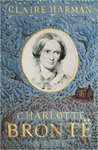
Charlotte Bronte: A Life by Claire Harman

My rating: 5 of 5 stars

This was my first foray into the world of biographical non-fiction. As a general rule I dislike anything that isn't fiction; but, after coming down from my Jane Eyre high, I found myself with a desire to learn more about the author of my favourite book. Sure, I understood the novel from a literary critical perspective, but I wanted to know what it was that influenced Charlotte Bronte to write it. And I found out many surprising things about the novel through this biography.

It wasn't as dry as I expected; I admit to harbouring the assumption that biographies were much like history books, with the date and the event written in simple, stark format. The composition was surprising, with this in mind. It was entertaining, at times sad; it never plodded along, save for the beginning (I was wondering why I was reading about her father when I had no interest in him - it made sense to me later). I was completely sucked in - I was told so many times over the course of reading this to put the book down and join the outside world for a while! The author handled her subject's character with grace and a clear respect for Miss Bronte; even I, with little previous knowledge, quickly became aware how easy it would be to portray Charlotte in a negative light, because certainly some of the things she does are questionable at best, condemn-able at worst.

I cried when Emily and Anne died; I bawled when Charlotte did. Of course, I knew it was coming - I wasn't living under a rock entirely, so I knew the basic timeline of each of the sisters' lives. But it is one thing to see it written as plain fact, and quite another to see it in the evocative, emotional language utilised by Claire Harman. I also really appreciated the consideration of the circumstances of Charlotte's final illness; the research is such that, instead of projecting the general impression that she died due to weakness from pregnancy coupled with consumption, the author produces a modern explanation, with sound logic, that her death resulted due to the pregnancy-related condition referred to as hyperemesis gravidarium, famously suffered by Kate Middleton during her pregnancy with Prince George.

This was a fantastic introduction to a previously unexplored genre. I think I found my niche - author biographies it is for me. I'm definitely going to read more Claire Harman.

Thursday, 26 November 2015

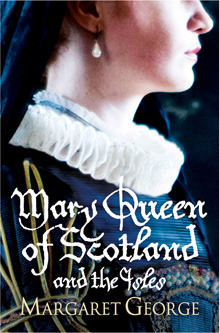
Mary Queen of Scotland and the Isles by Margaret George


18000059

Rating: ★★★★★

This is the story of Mary Queen of Scotland, the ill-fated ruler of the wild and savage land north of England, the reigning power on the island. It's a frightfully long book, and it covers all of her life, from her birth and the circumstances surrounding it to her death in 1587.

Mary is born in a time when Scottish independence is not secured, in a land fighting for freedom from English invasion. Henry VIII tries to claim her country for his own; she is crowned Queen at only six days old, after her father dies defending the country. She spends her childhood moved around Scotland in order to hide from English troops attempting to capture her and bring her back to England to marry Edward Tudor, the King's son. Eventually she is sent to France, to marry the young French prince Francois.

The novel itself takes readers from her time as beloved princess of the French court, to her short reign as Queen of France, and her return to Scotland. It portrays the political and sexual environment she was forced into, and rehashes over the controversies with her second and third husbands, the Lords Darnley and Bothwell respectively. We are taken on Mary's journey from revered to reviled, to her imprisonment and forced abdication to her baby son James, the future King of England, and her escape and fleeing to England, where she is held by her cousin Elizabeth I for nearly twenty years before finally being executed.

This novel was shockingly brilliant, and haunting. The scope of it takes readers on an emotional journey, and we watch closely as Mary grows to realise that she cannot see the world around her through a child's eyes. We watch as she makes good decisions, criticise her when she makes bad ones (and she makes so many bad ones!!!), and cry when, at the end, we are forced to look on as she comes to terms with her impending death.

Mary's characterisation was a big win for me. Plaidy tended to make her seem too stupid and simplistic; while Mary was certainly naive, there was no reason to  believe she was dumb. She was an incompetent ruler, but a good woman. George highlighted the complexity of her character. When it was over, I mourned. Mourned. As in, full-on crying for fifteen minutes mourn.

This is an epic read for anyone who loves historical fiction and is game enough to work through a lengthy novel of nearly nine hundred pages.

Saturday, 21 November 2015

Royal Road to Fotheringhay by Jean Plaidy

The Royal Road to Fotheringhay (Stuart Saga, #1) (Mary Stuart, #1)

Rating: ★★★★☆


"Ever since I was a child I had this morbid fascination with this time period. In particular, Mary Stuart, Queen of Scots. She was my introduction to the world of Renaissance intrigue, passion and politics. I couldn't exactly say that I related to her - but her story affected me profoundly, to the point that today she is still my favourite history lesson.

Jean Plaidy has become a recent love of mine. I've read few of her books; I started with
The Lady in the Tower with Anne Boleyn as the main character. After reading Philippa Gregory's attempt at capturing the Boleyn charm, I definitely found it lacking in comparison to Plaidy's - her interpretation of Anne was weak and somewhat two-dimensional, even outdated. But Plaidy's take on her, portraying her more sympathetically, was far more believable, and it quite honestly made me cry. So I knew I had to look it up and see if she had written anything on Mary Stuart.

The novel itself covers the major events in her early life; from her journey to France and indulging in the rich lifestyle of the sophisticated French courts, marrying the sickly Dauphin and becoming Queen, only to have him die - to returning to Scotland, marrying the awful Darnley, having her son, the intrigue with Bothwell and the Darnley murder plot, to finally being captured and imprisoned by the Scottish nobility.

I was impressed by the novel, and I am deeply surprised that there are so many negative reviews of this book; it is an excellent retelling of the early life of the Queen of Scots, and is quite clearly based on the author's interpretation of the facts, shown through the research done on the subject matter. I am inclined to think Mary was a good woman, if a weak and ineffectual leader, dominated by men who would later cause her downfall. I appreciated the fact that Plaidy didn't attempt to vilify either the Protestants or the Catholics too much (in my eyes, anyway).

I hands-down loved this novel, and I'm looking forward to reading the next one. I know I'll have to read Margaret George's version, but, even if it's just for a while, this book will remain close to my heart as a fond remembrance of my early childhood discoveries."

This was my review on Goodreads; after some reflection, and a means of comparison, I have to say that this is an easy introduction to the life of Mary Queen of Scots. If you're looking for a simple way to edge into her world, I'd start with this one. The language is uncomplicated, and the story flows fairly well. I admittedly now have a slight issue with the way she is presented in the novel. She comes off as weak and somewhat stupid, always ready to relinquish control to the men in her life. There's some inconsistencies with her character too, with her displaying strength one minute and doing a complete one-eighty the next. But other than that it is really quite a good novel.  I'd recommend this over Margaret George's rendition, as it is much less daunting and far easier to get through.

Sunday, 25 October 2015

Tess of the D'Urbervilles by Thomas Hardy


Rating: ★★★★★

Tess of the D'Urbervilles was a book I had wanted to read for a long time. I could never find the book in my local Dymocks store, so for a while I read it on a tiny screen on my iPhone, which is not at all useful for reading books, though it is pretty convenient. I finally got around to ordering it online, which was great, and the book arrived in perfect condition, which, for the edition I got, is pretty bloody difficult to achieve!

What first struck me about this book was Tess Durbeyfield's accent - it isn't how I was used to reading it in classic novels. The women are usually classy, proper and elegant - to have a girl with a country farm-town accent was a refreshing experience for me. What was also rather jarring was her home life; it is quite obvious from the get-go that she is rather unimpressed with the elder members of her family group, and seems to assume a role of responsibility over them. I felt sorry for poor Tess, being not at all like the vaguely driven family she grew up in. I was so shocked when the horse just died. It was really quite gruesome to read, too. Poor horsey.

I had mixed feelings about her parents throughout the novel. It felt like their motives honestly weren't for the benefit of their daughter, but rather to gain money and fortune; super fishy, the bar scene too. Tess is very reluctant to go through with carrying out the ambitions of her family, and I really appreciated that she was a character with such staunch morals - indeed, it was her guilt over the death of the horse that led to her leaving to visit the Stoke-D'Urberville family.

The first time Tess meets Alec its obvious she doesn't like him all that much - he is way too forward, and the impression that lasted was that he intended to take advantage of her. And plus, even his family background alerts you to the fact that he's probably a dishonest person. I mean, who lies about their heritage to get ahead? Who cheats someone else out of the esteem of claiming nobility in order to make money? You see the rape scene a mile off, and what sucks about it is that you know its coming, and you can't do anything about it. It's like a triple whammy, first with Alec raping her, then getting her pregnant, after which she has the child and is exposed to public shame as a loose woman. Then, after all that, the baby dies. It seems as though basically everything bad that could happen to a woman in the era happens to Tess in the novel.

I suppose I'm like many others when I say I don't really know which of the two men of Tess's life to hate more. Alec is just despicable; a wealthy man used to getting his way all the time, with no father in the picture and an invalid mother. He's a womanizer, a pervert and a rapist. He seems to think he should just get what he wants from women because he is a man. But, on the other hand, that is all you expect from him; you don't have any high hopes for him as a character because you know all he'll ever amount to is a lowlife.

I really, really wanted to like Angel Clare. He's quite obviously constructed with the aspects of a heroic male figure in mind, the one that should give Tess the happily ever after she so deserves. They meet at a dairy farm, where they both work. After a lengthy and passionate pursuit, Tess agrees to marry him. They do so at the closing of the year, on New Year's Eve; after this Angel confesses that he had been dishonest with her. It is clear throughout scenes with Angel that he is a proper man, with staunch, inflexible morals and principles. So when Tess, in a reciprocal sort of mood following his confession, tells him of her past, the fact that he decides to leave her is utterly shocking for me. I mean, I had such high hopes for him as a character! I almost think he's worse than Alec because you expect so much more from him. In the end he turns out to be a hypocrite, and a coward; the perfect male hero is revealed to be deeply flawed.

The ending was just so sad. I really hated the fact that, even after everything, Tess was still the one who paid. 

I really loved this book. Deep, affecting, and often quite depressing, it had a lot to offer regarding the sexual and moral value of women in society. I appreciate that it was written by a male author, showing that feminism doesn't just have to be carried by the female gender.

I highly recommend this book to anyone who loves female criticism in classic literature.